
This post is part of the “Macros For Menopause Series: Get The Skinny On How To Eat Healthy”
I’m not sure anything could be more frustrating than feeling overwhelmed by the conflicting content on social media and the internet surrounding menopause. Am I supposed to eat a gazillion grams of protein or not? Will lifting heavy make me look like a gym bro or not? How am I supposed to fuel my body without gaining weight? Is HRT safe or not?
Menopause and aging leave us feeling like too many things are out of our control. I get it – there’s so much conflicting or vague information out there and it’s hard to decipher what’s rooted in science versus sorcery, and even harder to find the time to interpret it all. The good news is that I’ve got your back, girl. Cutting through the menopause noise and providing the most up-to-date, evidence-backed information in an easy-to-digest way so that midlife women can be fit, feral and fabulous is the entire reason I founded That’s So Perfect!
Let’s focus our efforts today on healthy nutrition to optimize our menopause bodies. Nutrition is the number one, most impactful investment you can make in your current self and your future self, too. Fitness is the second most impactful. The types and amounts of food you put into your body can optimize how your body functions on a cellular level, and help combat weight fluctuations, decreased energy, sleep, mood and muscle gain / fat loss.
The most frequently asked nutrition questions I hear as a certified personal trainer, nutrition coach and menopause health coach from women who want to fight back against menopause symptoms while improving their health and fitness are:
- Eating healthier seems overwhelming, like another full-time job that I don’t have time to tackle – how can I make it simpler?
- Am I really supposed to eat THAT MUCH protein?
- How can I make eating healthier a habit that I will stick to? I’ve never been able to stick to a diet.
- Will I have to give up the foods I love?
This guide is intended to help you learn five core nutrition skills that are high impact but simple enough to integrate into your daily routine. You don’t have to overhaul your entire approach to nutrition overnight. You can make small changes today to eat smarter and reap the benefits immediately. When that becomes second nature, you can layer on a few more improvements. Keep following that pattern to build a strong set of healthy eating habits over time. Our goal at That’s So Perfect! is to equip you with the knowledge and the tools required to navigate menopause nutrition successfully and confidently.
Skill #1: Eating Healthy – Optimizing Food & Nutritional Quality
It’s important to learn how to consume enough of the foods and drinks that support your body’s function and well-being, and fewer of the nutrient-poor foods that exacerbate menopause symptoms.
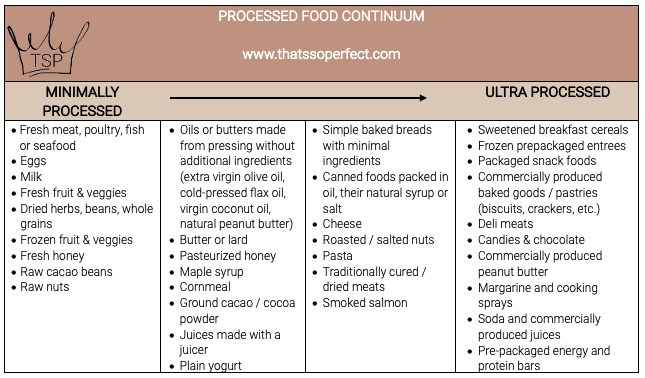
Minimally processed foods, a.k.a. “whole foods”, are rich in nutrients like vitamins, minerals, healthy fats, fiber and water. These foods also contain beneficial substances for menopause symptom-relief, such as:
- Plant nutrients: Reduces inflammation, improves gut health, can mimic estrogen
- Antioxidants: Protects cells, alleviates hot flashes, improves bone health, lowers risk of heart disease
- Omega -3 and -6 fatty acids: Supports brain and mood stability, lowers blood pressure, lowers cholesterol, combats hot flashes and vaginal dryness
- Minerals: Magnesium helps with insomnia and heart palpitations, calcium supports bone density, iron and zinc support cognitive health
In addition to the health benefits of eating whole foods, there are benefits to eating less processed food. Diets high in processed foods increase the risk of many chronic health problems that often appear in midlife such as cancer, insulin resistance and Type 2 diabetes, high blood pressure, heart attacks, strokes and osteoporosis. For examples of minimally processed food choices versus ultra processed, see the table below:
Skill #2: Nutrition Sources: Consuming The Right Balance Of Macros (Protein, Fat, Carbs) & Micros
Nutrients in food can be divided into two categories: macronutrients (macros = large) and micronutrients (micros = small). Menopause doesn’t require a whole new menu, but it does require some special considerations, one of which is the type and amount of macronutrients and micronutrients you consume to combat meno symptoms and optimize your long-term health.
Macros are substances the body uses in large amounts. They provide most of our calories needed to fuel our bodies. Calories are how we measure the units of energy our body needs to function daily – similar to the kilowatt units that appear on your home’s electricity bill that indicates how much electricity (energy) you used to operate your appliances, HVAC, lights, etc. Calories are the energy units that power every part of our body – brain, heart, lungs, movement, etc. Micronutrients are essential vitamins and minerals our bodies need in small amounts for vital functions like immune support, cellular health and immune health. Many of the micronutrients we need are derived from fruits and vegetables
There are three main categories of macros and each serves a unique purpose in fueling our bodies: fat, protein, and carbohydrates. Macro’s have long been a core component of nutrition planning, but there are specific macro considerations for females that are different than men, and for women in menopause versus those who are not in menopause.
Macro: Protein
Most midlife women will benefit from eating more protein. Did you know protein not only builds and repairs tissues (like muscles) and improves bone mass, but it’s also used to make hormones, neurotransmitters and components of your immune system? Protein is NOT just for gym bros who want to bulk up, it’s also for women who want to be healthy and strong for everyday life!
As women age, our body becomes less efficient at using protein to make muscle. Our digestive system also becomes less effective at digesting and absorbing protein. This means we have to eat more protein to meet our body’s needs. The recommendation for menopausal women’s daily intake of protein is that it equal 30% of your daily calories as a baseline, with more needed if you are participating in activities to increase muscle gain or strength.
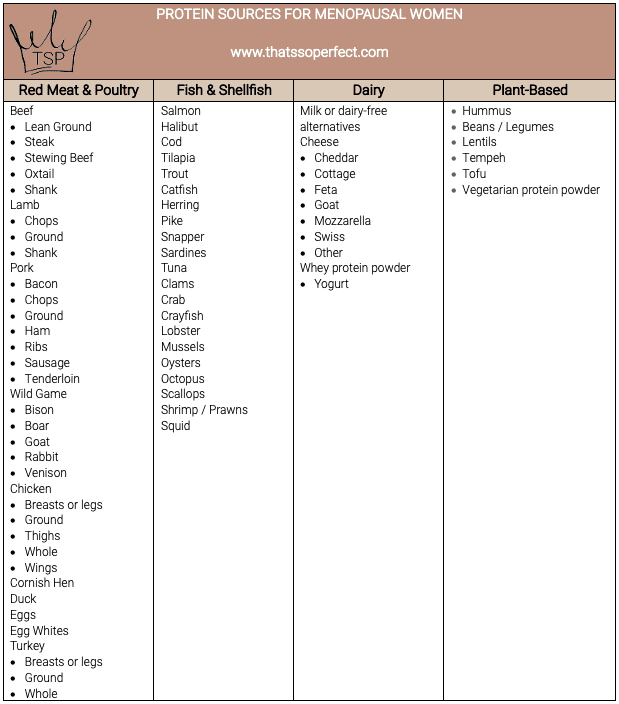
Protein comes in many forms. If you’re a big meat-eater, try to mix up your sources or try to have a meatless meal at least one day per week to help keep your GI tract healthy. If buying cured meats, look for nitrate / nitrite-free. See the table on the next page for an outline of protein sources.
Macro: Carbohydrates (“Carbs”)
Carbs provide your body with energy when the body breaks them down into glucose (blood sugar), which is used to fuel your cells, tissues, and organs. Of the three macronutrients (protein, carbs, fat), carbs are the purest and most efficient energy source. During menopause, your body’s ability to metabolize carbs decreases, resulting in less available energy for your body. That contributes to an increased risk of weight gain, cravings and fatigue. As a result, menopausal women need very healthy, efficient sources of carbs to optimize how your body metabolizes and converts them to energy.
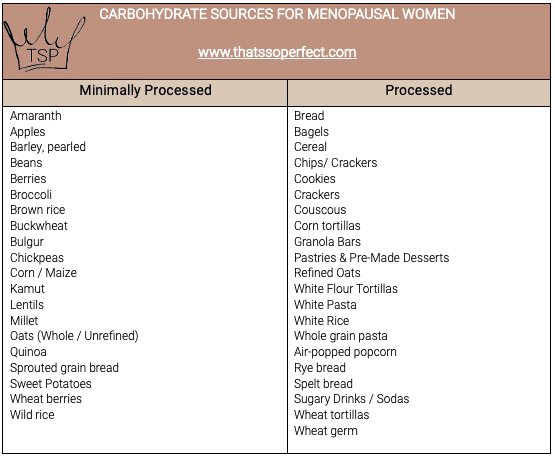
Menopausal women should focus their carb consumption on complex, high-quality carbs like whole grains, fresh vegetables and fruits and limiting their intake of refined ultra-processed carbs like sugary breakfast cereals, fruit juices and sodas. High quality carbs are slower to digest and high in fiber, which can also help to regulate blood sugar, stabilize your mood, provide sustained energy throughout the day (avoiding energy crashes) and reduce hot flashes.
Because carbs provide energy, the amount of carbs you consume daily depends on how active you are and when, and therefore what your energy supply needs will be throughout the day. The general guideline for women in menopause is that carbs equal about 40% of your daily calories, with more needed if you participate in high energy-demand activities. We put together a quick reference table on the following page as an example of minimally processed versus processed carbs. We encourage you to read the labels on crackers, breads and pastas which can often be highly processed. Look for less than 10 grams of sugar per serving, the phrase “whole grains” near the top of the ingredients list and overall, a minimal list of ingredients.
Macro: Fats
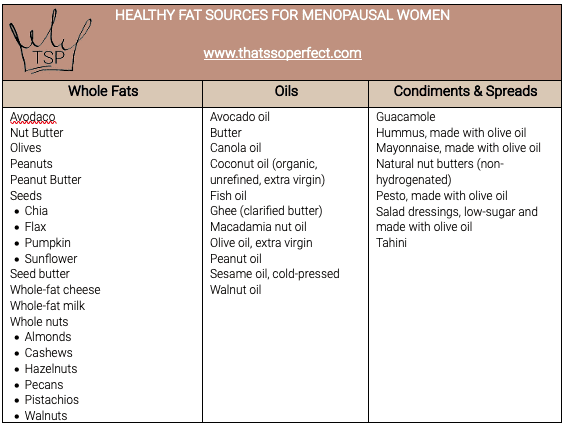
Fats have gotten a bad reputation over the years. The truth is that fats have many important jobs in the human body, including hormone production, nervous system function, improving recovery from exercise, promoting muscle mass, keeping skin soft and pliable as well as lowering inflammation – all of which are beneficial in menopause. The guideline for daily fat intake for women in menopause is that healthy fats make up about 30% of your total daily calories.
The key to managing fat micros is consuming fats from healthy SOURCES. The risk for cardiovascular disease increases sharply during menopause. A key contributing factor to cardiovascular risk is fat intake from saturated and trans fats (bad fats) such as bacon, sausage, fast food, fried foods, commercially produced fats like margarine and ultra-processed foods like pastries. Making healthier choices for the source of fat is a simple change you can make today and reap the benefits long-term. We’ve provided a table below of some examples of healthy fats as a guide to get you started. This is by no means an all-inclusive list of all healthy fats.
Where Do Fruits and Veggies Fit?
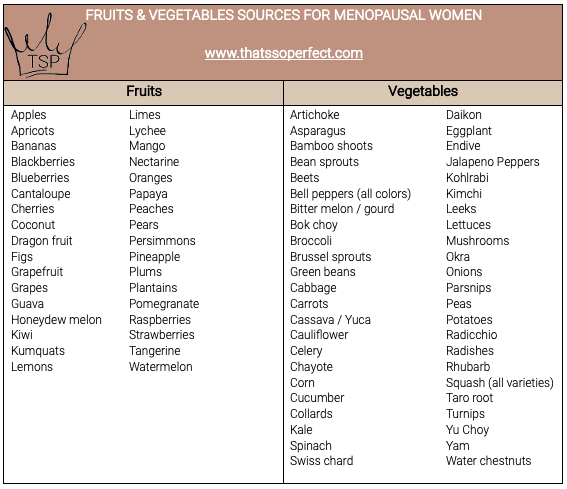
People often get confused when they see a portions chart or a macro chart that has Protein, Carbs and Fats in it, and then a separate column or portion for fruits and veggies. This is because fruits and veggies can span across the macro categories. For example, potatoes are a starchy carbohydrate, avocadoes are a healthy fat and black beans are high in protein.
Fruits and vegetables are also a primary source of micronutrients such as vitamins, minerals, fiber and beneficial phytochemicals. These are essential for optimal health but needed in smaller amounts than the energy-providing macronutrients. They support bodily functions such as digestion, energy production and immune health.
Some fruits and vegetables are so good for you that they’re considered “freebies” when counting calories – they have low calorie counts but contain high micronutrient benefit. The more colorful, the better, as brightly colored fruits and veggies are linked to lower risks of chronic diseases such as cardiovascular disease, cancer and depression. Here is a reference table for healthy fruits and veggies to use when meal planning. When possible, buy seasonal and local for a fresher, better taste. The daily recommendation for menopausal women is 5 servings of combined fruits and vegetables per day to meet vitamin, mineral and fiber needs. This is in addition to your macro carb portions.
Skill #3: Practice Better Portion Control
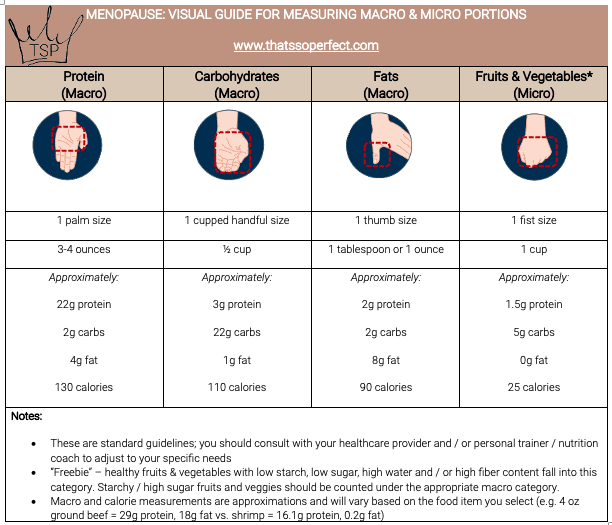
Studies show that most people underestimate how much food they consumed during the day, by as much as 30%-50% of their caloric intake. That means they’re eating 30%-50% more than they realize. Most of us “eyeball” portion sizes, but the truth is we don’t usually know what an appropriate portion is. This also varies by country, with the U.S. leading the charge by super-sizing everything, training Americans to think that an enormous portion is normal.
Measuring and tracking portions is the best way to know if you’re consuming too little or too much. However, if you feel that pulling out a food scale every time you want a snack just sucks the joy right out of eating, then you can use our simple guide below to help you practice portion control anywhere, anytime, no scale required. The goal is to calibrate what you’re eating and how much so that you have the right amount of energy available to your body’s needs throughout the day and to optimize your long-term health.
Skill #4: Establish A Few Core Behavior Changes To Set Yourself Up For Success
It takes about 60 days for a behavior change to become so ingrained that it’s considered a habit. This includes changing behaviors around nutrition and eating. Often, behavior change related to nutrition fails in the first 1-2 weeks due to unrealistic expectations at the get-go. Set your expectations realistically. Acknowledge to yourself that the first few weeks won’t be easy, but if you stick to it each day it will soon become second nature.
To make it easier for you to make good choices without stressing out at every snack and mealtime, try implementing these behavioral strategies:
- Meal-prepping & batch cooking: Make plenty of extras of all your healthy favorites. One of the things fitness pros have in common is they eat their favorite snacks or meals on repeat, every day or week. When you find a recipe you like, make a lot of it and store it in smaller grab-and-go containers. Freeze it, or stack them up in the fridge for easy, no-stress access. Waiting until you’re starving, standing in the kitchen wondering what to cook will set you up for failure. Crockpots, casseroles, large-batch soups and salads are easy ways to accomplish this. Divide everything up into individual portions for storage so you’re not tempted to overeat. I prefer glass containers, especially if I’m going to reheat food in them. Snapware has a bundle that is my favorite – the smaller containers are great for grab-n-go snacks or small portion meals, and the larger are great for batch servings. Amazon link here.
- Frozen fruits & veggies or pre-chopped, ready to cook: Frozen fruits and veggies are typically frozen at peak freshness, so they’re the next best option to buying fresh. If you have a favorite fruit or veggie that’s out of season, buy it frozen. If you’re looking to minimize your prep time, opt for pre-chopped, ready to cook individual ingredients from your local store.
- Pre-cooked meals from the grocery / deli: Rotisserie chickens, kabobs, meals-to-go made in your local grocery / deli are good options to have in the fridge, all you have to do is cook or heat them. This is preferred to a pre-packaged freezer meal which is likely to be full of preservatives (highly processed, low nutritional value).
- Smoothies: While your primary source of protein should be from fresh, whole foods, it’s ok to supplement with smoothies. Find a good, clean protein brand, and blend with fresh or frozen fruits and yogurts. For unflavored, I like Isopure (found on Amazon here). For flavored, I like 1Up Nutrition’s Lemon Italian Ice (use this link to 1UP’s website for 20% off your first purchase).
- Supplements: If you have dietary restrictions that prevent you from consuming certain foods that leave a gap in your vitamins and minerals requirements, then consider supplements. Remember to consult with your menopause care team first.
Skill #5: Change Your Mindset – Smarter Food Choices Are An Investment In Your Current & Future Self
I cannot stress enough…..you can’t out-exercise what you put in your mouth. Food is fuel. Would you put the wrong type of gas in your car and risk ruining the motor? Try viewing food as the special ingredient to your fitness, good health and longevity. The goal is not to restrict your options, nor to eat perfectly every single day. Your goal is to eat foods that give you energy, make you feel healthier, help you achieve your fitness goals, AND that you also enjoy.
Think about your 401(k) or your savings account for a moment. You must make deposits into it if you want it to grow into something worthwhile that you can use in the future. Your health and wellness follow the same philosophy. If you want to be healthy, self-sufficient and able to care for yourself in the future, you must make an investment in your health today. The most impactful way you can do that is through smarter nutrition choices combined with a good fitness routine.
Remember, nutrition is not about perfection. Take one day at a time, celebrating your successes that day rather than berating yourself for any slip-ups. If you slip one day and eat too much or not enough of a particular macro, don’t beat yourself up. Acknowledge it, understand why it happened, and move on. Perhaps it was intentional – a celebration or a designated cheat day. Perhaps it was an emotional trigger so you give yourself a hug, learn from it, and shore up your mental defenses so you can manage it differently next time. Making smarter food choices does not mean you’ll never again eat your favorite foods or that you’re supposed to starve yourself!
We hope you find this guide helpful enough to jump in and get started on your path to healthier menopause-friendly nutrition. You can find additional resources on our blog That’s So Perfect, and on our socials: That’s So Perfect on Facebook and That’s So Perfect on Instagram. Follow us for more insights on being fit, feral and fabulous during this stage of life.


