
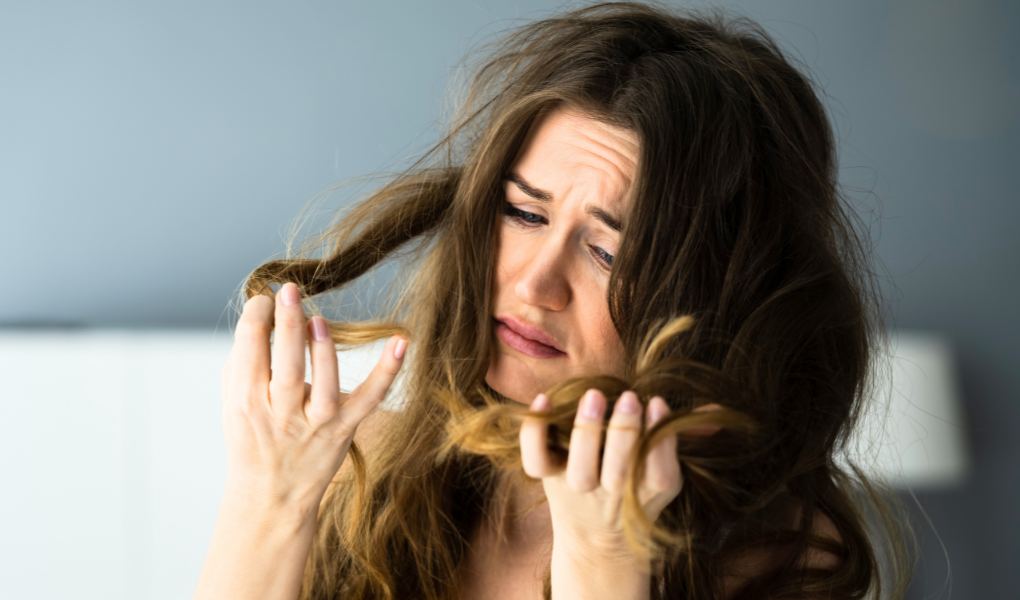
And a bunch of other important facts you need to know about hair health if you REALLY want healthy hair!
Did you know that 50% of women age 40+ suffer from hair loss, thinning and breakage from dry / brittle texture as a result of hormonal changes during perimenopause and menopause? As if fatigue, hot flashes, brain fog and bouts of rage aren’t frustrating enough, the hormonal changes that accompany perimenopause and menopause can drastically affect our scalp and hair health. Estrogen is the “hydrating hormone” for our bodies. As it deceases with age, our hair begins to thin, become dry and prone to breakage, and our scalps become sensitive to the lack of moisture.
Whether it’s from coffee house anecdotal surveys, or scientifically backed research, the results consistently confirm that one of the top concerns of women age 40+ is hair thinning, shedding and dry, brittle hair prone to breakage. This is no surprise, given that hair holds a lot of cultural value, and is often associated with beauty, power, social standing, femininity and youth.
Women are significantly more likely to suffer emotionally as a result of their hair issues, becoming depressed and suffering from low self-esteem.
It can even result in isolation, declining performance at work, and self-isolation. It doesn’t matter if you’re going through mid-life hormonal insanity or you’re just stressed to the max from the demands of your home and professional life, hair breakage and hair loss are real, scary, and life-altering for women.
I personally experienced dry, brittle, fragile hair to the point that I was concerned my hair would never recover. It almost felt as if I woke up one morning and big chunks of my hair had just snapped off. Looking in the mirror, I felt like I was back in kindergarten and had given myself the worst home haircut ever. So many confusing and frustrating things are happening to our bodies during peri- / menopause. Adding hair problems notches up the anxiety level even further. It’s a sickening feeling. My hair strands had previously been pretty healthy. I don’t torture my hair too much, I mostly let it air dry and generally wear it naturally straight. Then one day a few years ago, it seemed to suddenly become brittle and started breaking higher and higher up on the hair shaft. I ended up with these weird short chunks around my face, and several short chunks around the middle of my hairline (like where the bottom of a baseball hat would rest, except I don’t wear hats often enough for that to be the cause).
Even under healthy conditions, my hair has always been fine in texture and slow growing. It has taken me almost 3 years to nurture my hair back to the right moisture level. Although it’s still thinning (see part 1 of this series HERE, about caring for thinning hair and shedding), I’ve at least gotten it back to a somewhat healthy state with lots of love and care, and a ton of consultation with my hair stylist. I kid you not – I’m so particular about my hair now that every stylist at my favorite salon knows that they HAVE TO BE EXTREMELY GENTLE WHEN HANDLING MY HAIR. Gods love all the stylists at my salon for allowing me to be the highest maintenance, most queenly client ever!
Tips From A Stylist And A Nurse Practitioner Within The TSP Community
I want other women to know that there are steps you can take to combat dry, brittle hair and stop breakage. I interviewed two members of the That’s So Perfect Community (who also happen to be good friends). These women have professional knowledge about changes in our hair and bodies as we age and provided excellent suggestions. Special thanks to my most-trusted hair stylist, Amanda Dayton, a master stylist and colorist and co-owner of Affini & Co. Luxury Hair Lounge. She shared with me her professional tips and tricks to care for aging, dry, brittle hair and extreme breakage. I’ve been trusting her to care for my hair for many years. In fact, she was with me before my hair began to suffer the impacts of hormonal changes, has now been actively helping me try to return my scalp and hair to a healthier state for a few years now. I’m also grateful for the insights about how hormonal changes and nutrition affect our hair, provided by my friend Melinda Rhoads, who is a nurse practitioner and founder of Rho Wellness. I sat down with both of these amazing ladies, and we talked for a couple of hours about hair science, whole-body wellness, hormones, products and strategies that can be leveraged as a multi-pronged attack to combat brittle hair prone to breakage.
We may not be able to entirely combat biology, but there are still many options to protect and optimize what you have, and to create the healthiest environment possible for your hair. Please keep in mind that I’m barely skimming the surface in this post. There are SO MANY factors that go into hair health (genetics, environmental, physical, etc.), and each woman’s situation is unique. You should always consult your hair stylist, dermatologist and your primary care physician to design an approach that works for your individual needs and takes your whole health ecosystem into consideration.
Lack of Knowledge About Scalp & Hair Health Leads To Unrealistic Expectations And Ineffective Treatments
The hair growth cycle is pretty fascinating, but unless you’re a hair stylist, biologist or MD, you probably have no idea how long the growth cycle works. People often expect an instant fix or a magic bullet that will solve their hair woes in a matter of a few weeks. The global haircare market is estimated to be a $107 billion dollar industry in 2024. In the U.S., hair growth products are the fastest growing haircare segment, with American consumers spending over $121 million annually on products to treat hair fall, thinning and breakage. I shudder to think how much of that $121 million is wasted on “miracle cures” because the buyer didn’t understand what’s feasible and what isn’t when it comes to hair health. Information is power, ladies, so let’s educate ourselves before we spend our hard-earned dollars. We’ll start with basic hair facts.
Hair Facts:
- Hair follicles do NOT all grow at the same rate, at the same time. Each follicle on your scalp is at a different stage in the growth cycle.
- You should NOT necessarily be alarmed to find hair fall in your brush every day. Most people have about 100,000 scalp hairs at any given time, all in a different stage of the growth cycle. The normal rate of shedding is about 100-150 hairs per day.
- Hair follicles can’t go from thick to thin and back to thick again overnight. Since each hair strand is in a different stage in the growth cycle, the density and total number of hair strands stays fairly stable over time, in normal health conditions.
- Anagen is the growth stage of the hair lifecycle. A single hair strand is in that growth stage from 2 – 8 years! It takes longer than a day or a week or even a month to create a healthy enough environment to notice change in all of your hair.
- Each hair strand rests for about 2 – 3 months before it begins to shed. When it is time to shed, the new strand pushes the old strand out. Because your hair grows from the root, not the ends, scalp health is essential.
7 Common Causes Of Dry Scalp, Brittle Hair and Breakage
Triggers that shorten the anagen (growth) stage and / or telogen (the resting phase) are the culprits for dry, brittle hair and excess breakage – in the most basic of explanations. Most if not all of these triggers are commonly found in women ages 40-65. The five most common are:
- Inflammation
- Hormones
- Stress
- Poor Nutrition
- Medication-related
- Environmental (pollution, chemicals, etc.)
- “Wear & Tear” – styling tools, toxic products, etc.
These triggers can be caused by a multitude of factors, ranging from disease / illness, anxiety, to age-related hormonal changes like loss of estrogen, etc. One trigger could cause a domino effect to the other triggers. It doesn’t take much to cause an imbalance in the scalp health and hair follicle health. The wide array of root causes, the likelihood that it could be a combination of triggers rather than just one, and the difficulty in definitively diagnosing some of these symptoms result in many women believing there is nothing that can be done to treat or at least manage their hair loss more effectively.
10 Things You Can Do To Combat Dry Scalp and Brittle Hair Prone To Breakage
While there may not an instant, miracle fix for dry scalp and brittle, fragile hair, there are there are a number of things you can do to mitigate the situation and improve your scalp and hair health. Here are 10 tips that may help (always consult with your medical practitioner before trying something new)…
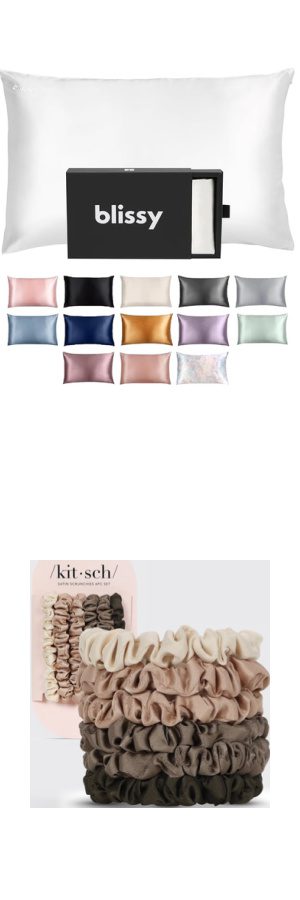
1. Be kind to your hair – use silk accessories to prevent breakage.
- Silk Pillowcases: Not only will your fragile hair thank you, but so will your collagen-depleted skin. Cotton and linen are porous materials that literally pull moisture out of your hair and skin and can “grab” your hair and skin while you’re sleeping. If you’re a “thrasher” when you sleep and wake up with your hair looking like you wrestled a wild boar in your sleep (this is 100% my daughter), then a silk pillowcase is a must-have. If you’re a side sleeper who wakes up with a pillow crease down your cheek then a silk pillowcase should help diminish that over time with consistent use! BONUS: Silk is a better temperature regulator than cotton, so it also helps with those raging night sweats too! I switched to a silk pillowcase several years ago, and I will never go back. I even have an extra pillowcase that I take with me when I travel. I went so far as to buy a very brightly colored one so that I wouldn’t forget to remove it from the hotel pillow and pack it in my suitcase before returning home! Blissy Silk Pillowcases ($58+ for standard size) are by far the best, IMHO. I’ve tried the cheaper ones from other stores but they just aren’t the same quality of silk. You can see and feel a difference.
- Silk Scrunchies: Similar to the pillowcase, silk scrunchies are much gentler on your hair. If you’re a fan of messy buns or ponytails and find yourself wondering why your hair is broken off in odd chunks midway around your head, it’s because those rubber bands latch onto your hair and break it off. If you insist on messy buns or wearing your hair up, switch to silk scrunchies. You can find them in a variety of sizes, even tiny ones if you don’t like the big obnoxious ones. I love these by Kitsch. $10 for a set of six.
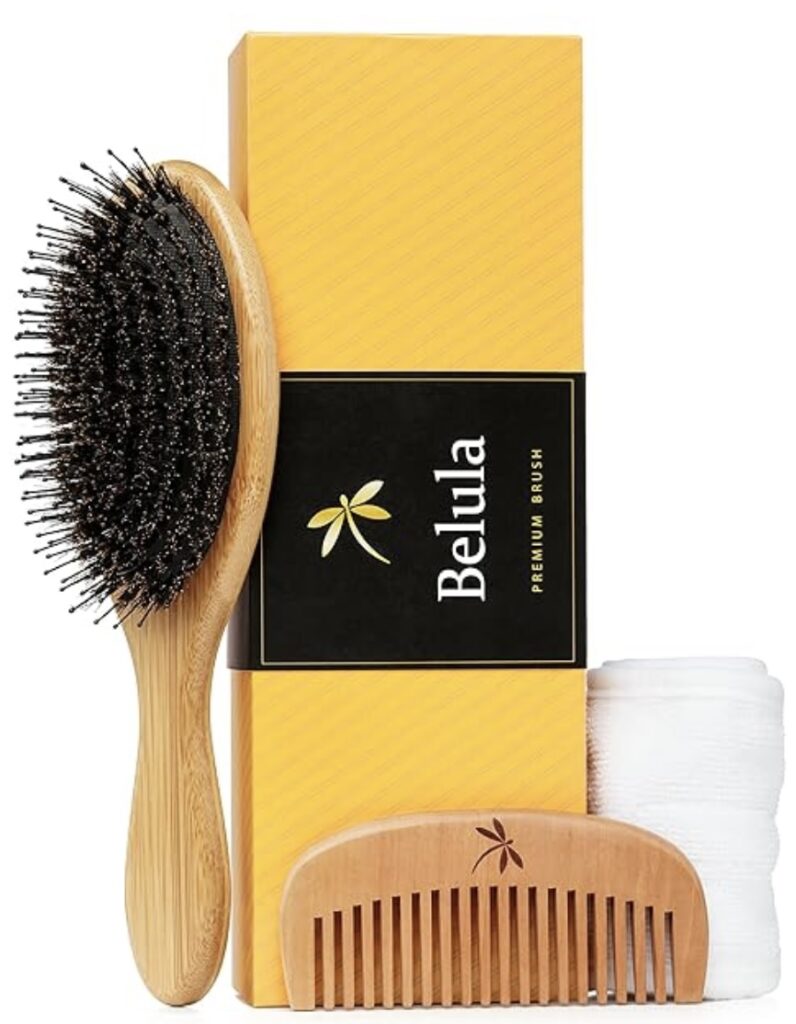
2. A boar bristle brush and a wide tooth comb are your new best friends. A boar-bristle brush naturally conditions your scalp by spreading the oils through the rest of your scalp and hair to coat all of your follicles. It’s also gentler on your tangles. Only use it on your dry hair, NOT on wet hair. For your wet hair, use the wide tooth comb to gently comb through your tangles after you get out of the shower. Start at the bottom of your hair, and work your way up in small section. Be as gentle with your hair and scalp as you would a newborn baby! You can get a reasonably priced, good quality one from Amazon: Boar Bristle Brush Combo $25

3. Don’t wash your hair every day. I know, this sounds like heresy, but I got the exact same advice from every hair stylist I spoke to about dry, brittle hair prone to breakage. Amanda recommends washing every 5 – 7 days.
- If you work out every day and worry about sweaty-hair smell, don’t fret. You can still rinse water through your hair when you shower. Just don’t shampoo it. Excessive shampooing strips the oils and exacerbates the dry scalp and brittle hair follicles.
- She also recommends skipping the dry shampoo. They can clog your scalp, and since most are designed to soak up oils, they also exacerbate the dry hair problem.
4. Healthy nutrition nourishes your scalp from the inside-out. Melinda stresses the importance of an organic, dye-free, no preservative, whole / fresh foods whenever possible. The junk in your food can cause inflammation or can be hormone-inhibitors which in turn impact your scalp and hair health. Eating healthy and clean to properly nourish your body is never a bad idea at any age. The vitamins and proper balance of proteins, carbs and fats can do wonders for scalp and hair follicle health.


5. Hormone replacement therapy: Sometimes, there just isn’t a natural option that can combat the science of aging. On those occasions, you may find hormone replacement therapy is what your body needs to reboot your system and rebalance hair growth phases. This should always be done under the care of your medical practitioner. A really important note on this one: there’s new research around the safety of HRT, and it’s great news. (We’re working with Melinda, Founder of Rho Wellness on a series of posts about hormone treatment therapy – COMING SOON!)
6. Vitamins & supplements: Thoughtfully supplementing your normal intake of vitamins and minerals to offset a deficiency – whether from poor nutrition or other health concerns – may prove to be helpful in optimizing your scalp and overall body function. This, too, should always be done in consultation with a medical practitioner to avoid over-supplementing or contraindications with other medications. Similar to #3 above, Melinda reminds us that this approach is most effective when it’s part of a whole-body wellness plan.

You can take individual “A, B, C, D vitamins,” or you can take a combo designed that contains a combination optimized to aid with hair growth and healthy scalp.Based on sales and consumer review data, the popular combo-supplements is currently Nutrafol Women’s Balance Formula designed for women age 45+. $79. This is what I have been taking for the past couple months and I am starting to see a different in hair strength. Collagen supplements are also popular, but really require you to know whether or not your body can digest them effectively.
7. Use caution when considering color or highlights. Be thoughtful about whether or not you want to color your hair. Again, I can’t stress enough how crucial it is to consult with an experienced stylist who can advise you on what they think your hair can tolerate, and then how to care for it afterward to maintain optimal health. Determining if color or highlights are the right approach for you really depends on individual hair texture and health. Understand that coloring your hair (going from light to dark) is accomplished by depositing pigment on your hair which fills the hair follicle.
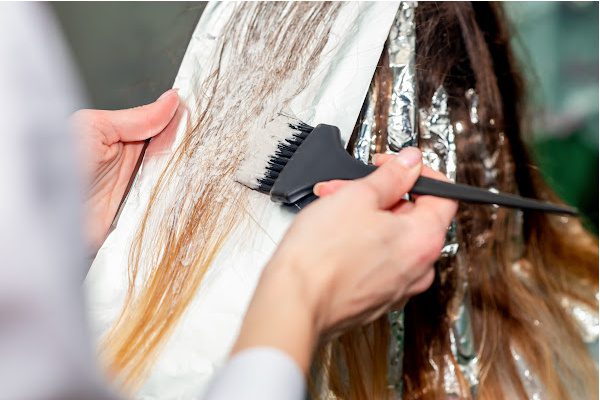
This may make your hair appear thicker, but it’s temporary and if you change your mind and want to go light again, you could risk substantial damage to bleach out the color pigments air. Lightening (bleaching) basically blasts the hair shaft open so the color can be stripped out, and then you replace it with a different color that seals the shaft closed again. The bleaching step is harsh on already fragile hair, drying it out and weakening the hair shaft. If you already have color / highlights and need to maintain it, then consider these strategies:
- Stretch out the frequency of your appointments so that your hair has time to recover. My hair doesn’t grow very fast, so I can stretch my appointments out 6 – 8 weeks before my roots show enough that I get annoyed.
- Consider doing a partial color treatment versus a full treatment every appointment. I’ve been doing this since I first began highlighting my hair. (That first appointment was back in 7th grade, we won’t discuss how many years ago that was!) My appointment series usually looks like this:
- Appointment 1: Full highlight, root bump, trim
- Appointment 2: Partial Highlight, root bump, trim (remember – ALWAYS trim, even if it’s just a snip, it prevents further breakage of that hair shaft)
- Appointment 3: Partial highlight, root bump, trim [Start back at Appointment 1 and repeat pattern.]
This means in a year’s time, I only have about 8 appointments, and of those, only 3 require a full “attack” on my fragile hair. If it’s summer and my roots stay light due to sun exposure, then I can sometimes skip the root bump, too. BONUS: Stretching out your appointments and avoiding a full “attack” on your hair at every appointment means you’re not only saving your hair, you’re saving MONEY!
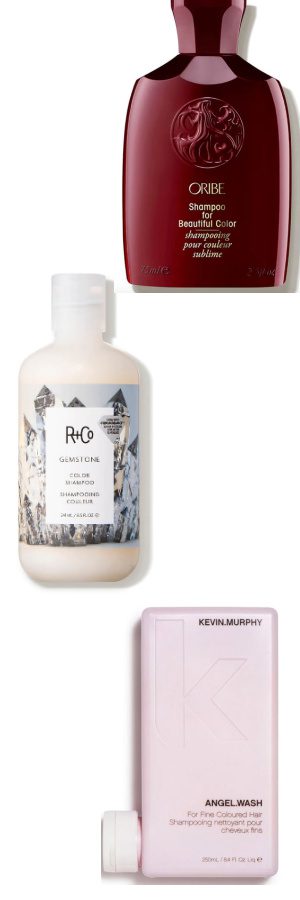
8. Use color protectant products so that your color doesn’t fade as fast, allowing you to stretch your appointments out further.
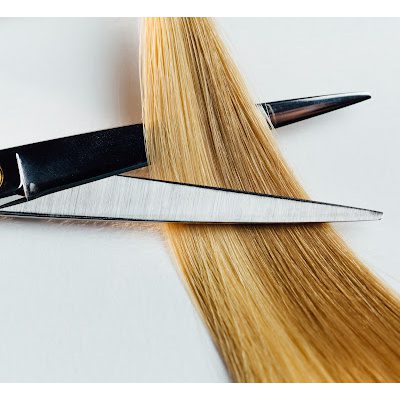
9. Be consistent with the frequency of cuts / trims. People with fragile hair often stop cutting it because they don’t like the short pieces that have broken, and want the uneven ends to grow out more. This works against you. Remember, your hair doesn’t grow from the ends, it grows from the root. If your hair is fragile and breaking on the ends, it’s negating any growth that is occurring at the roots. Regularly trimming it will leave you with healthy ends so you will eventually see your hair becomi
10. Product, product, product. Amanda says, “People don’t give products enough credit. I can talk about the benefits of products all day long. Not only can products support the cut and style that you desire, but they can also protect and nourish your dry hair and scalp. Her top recommendations are:
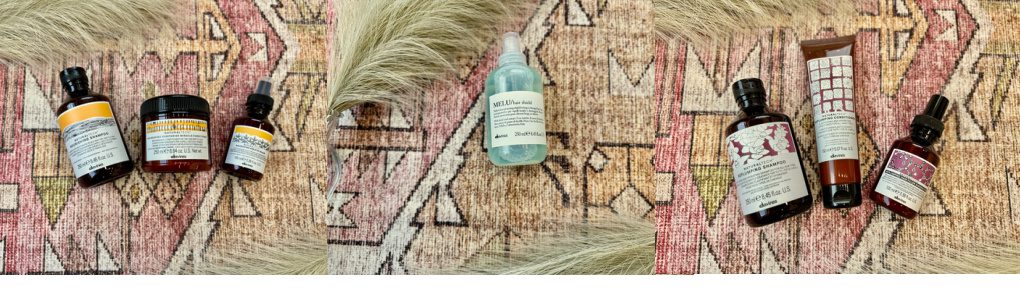
This includes never, ever skimping on heat protection (which is like SPF for your hair). It’s best to give the hot tools a break whenever you can, but if you have to use heat, you MUST use a heat protectant. Here are our favorites:
- Lightweight leave-in conditioners can help add a little moisture and make combing out wet hair an easier task, reducing breakage. Just don’t use a heavy one, or overuse the one you select – it will clog your scalp and weigh down your hair. Remember, use that wide-tooth comb to work the tangles out gently, and start from the bottom and work your way up.
- For special treatments, hydrating scalp masks can be really helpful. As our estrogen decreases, so does scalp moisture. This causes dry, itchy scalp and makes it harder for the scalp to send moisture down through the hair follicle. In turn, this inhibits new hair growth and results in really dry hair follicles that are more prone to breakage. Just make sure the products you choose are lightweight to avoid clogging your scalp.
- Avoid toxic ingredients! Stay away from:
- Silicones: Clogs scalp, causes hair fall and dandruff
- Sulfates: Strips scalp of natural oils, causing dryness and irritation
- Parabens: HORMONE DISRUPTOR, linked to many health concerns including breast cancer
- Phthalates: HORMONE DISRUPTOR
- Formaldehyde: Irritates scalp, can cause hair loss
That’s it! You are now well-educated and armed with lots of ideas to protect your hair.
If this list seems overwhelming, just pick 2 or 3 things that you can change today. When you have those mastered, pick 2 or 3 more. The most important outcome is that you feel armed with enough knowledge to make informed decisions on which tips will work best for you. If you’re doing a scalp or conditioning treatment that needs to sit on your hair for a while, try tackling those on your Spa Night At Home To Relieve Stress And Soothe Your Anxiety. Don’t forget – please consult with your hair stylist and healthcare professional before finalizing your strategies to combat dry scalp and hair that is prone to breakage.
Cheers, lovelies!


