
This post is part of the “Macros For Menopause Series: Get The Skinny On How To Eat Healthy”
Let’s be real. Menopause and aging leave us feeling like too many things are out of our control. The most frequently asked food-related questions I hear as a certified personal trainer, nutrition coach and menopause health coach from women who want to fight back against menopause symptoms while improving their health and fitness are:
- What’s a macro?
- What am I supposed to eat?
- How much am I supposed to eat?
- What lifestyle / behavior changes can I make so that I will stick to eating healthier?
- Am I REALLY supposed to eat THAT MUCH protein?
I get it – there’s so much conflicting or vague information out there and it’s hard to decipher what’s based in science and even harder to find the time to interpret it all. Applying it to your lifestyle can seem impossible without feeling like nutrition is your new full-time job – and who needs another job?!
The good news is that you don’t have to overhaul your entire approach to nutrition overnight to begin reaping the benefits of eating smarter. You also don’t have to give up everything you love eating. Eating smarter for this stage of life is a skill (or a set of skills) similar to riding a bike. It takes practice to put the skills together so that you don’t tip over on your bike (balance, pedaling, steering). After a little practice, riding the bike becomes second nature. The same is true with eating smarter. You can make a few changes at a time, and as you master those, layer on a few more new skills.
Healthy eating should not be seen as a punishment. It should be seen as a benefit – an investment in your current and future self.
One of the simplest but most impactful changes you can make is to proactively manage your macros. The types and amounts of food you put into your body can optimize how your body functions on a cellular level, and help combat weight fluctuations, decreased energy, sleep, brain fog, mood and muscle gain / fat loss. This blog post will teach you what macros are, why they’re important, and some easy tips for managing them.
What Are Macros?
Nutrients in food can be divided into two categories: macronutrients (macros = large) and micronutrients (micros = small). Menopause doesn’t require a whole new menu, but it does require some special considerations for how you balance the type and amounts of macronutrients and micronutrients you consume to combat meno symptoms and optimize your long-term health.
Macros are food / nutrients the body uses in large amounts. Everything you consume can be categorized into one of the three macronutrient categories: Protein, Carbohydrates and Fats. Macros provide the calories needed to fuel our bodies. Calories are how we measure the units of energy our body needs to function daily, powering every part of our body – brain, heart, lungs, movement, etc. Micronutrients are the essential vitamins and minerals our bodies need in small amounts for vital functions like immune support, cellular health and immune health. Many of the micronutrients we need are derived from the food we eat, primarily fruits and vegetables.
Macro’s & micros have long been core components of nutrition planning. There are specific macro and micro considerations for females that are different than men, and for women in menopause versus those who are not in menopause. Furthermore, your individual needs will be different than mine because your health ecosystem (health history, activity level, etc.) is different than mine. However, there are guidelines, backed by scientific research, that are generally agreed up on as an appropriate starting point for menopausal women. This post is based on those guidelines. From here, you can customize to meet your individual needs.
Macro: Protein
Did you know protein not only builds and repairs tissues (like muscles) and improves bone mass, but it also helps balance hormones, stabilize your metabolism, and promote healthy skin and hair? Protein is NOT just for gym bros who want to bulk up, it’s also for women who want to be healthy and fit for everyday life!
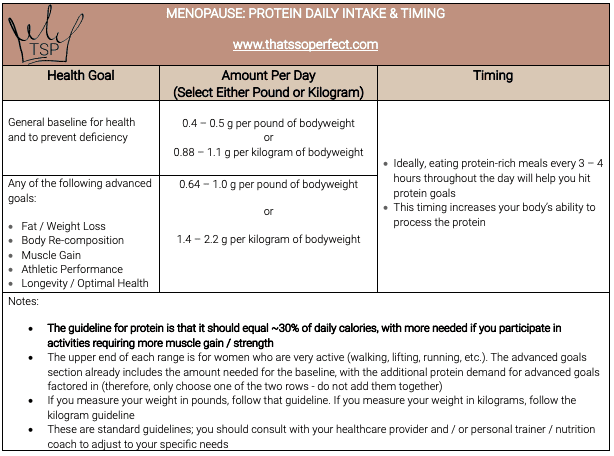
Estrogen regulates how our body synthesizes protein. As estrogen declines, our body becomes less efficient at using protein to make muscle and to provide other benefits mentioned above. This means we must eat more protein to overcome our body’s changing ecosystem. Adequate protein is essential for balancing hormones, maintaining muscle and bone strength, stabilizing blood sugar and supporting your liver’s detox function. See the table below for guidance on recommended protein intake for menopausal women. To follow the table, you would first select your health goal from the left column, then follow across to determine your daily protein intake needs.
Protein comes in many forms. If you’re a big meat-eater, try to mix up your sources or try to have a meatless meal at least one day per week to help keep your GI tract healthy. If buying cured meats, look for nitrate / nitrite-free.
Macro: Carbohydrates (“Carbs”)
Carbs provide your body with energy when the body breaks them down into glucose (blood sugar), which is used to fuel your cells, tissues, and organs. Of the three macronutrients (protein, carbs, fat), carbs are the purest and most efficient energy source. During menopause, your body’s ability to metabolize carbs decreases, resulting in less available energy for your body. That contributes to an increased risk of weight gain, cravings and fatigue. As a result, menopausal women need very healthy, efficient sources of carbs to optimize how your body metabolizes and converts them to energy. Menopausal women should focus their carb consumption on complex, high-quality carbs like whole grains, fresh vegetables and fruits and limiting their intake of refined ultra-processed carbs (e.g. soda, sugary pastries / cereals / desserts, white bread, instant pastas, etc). High quality carbs can also help to regulate blood sugar, stabilize your mood, prevent energy crashes and reduce hot flashes.
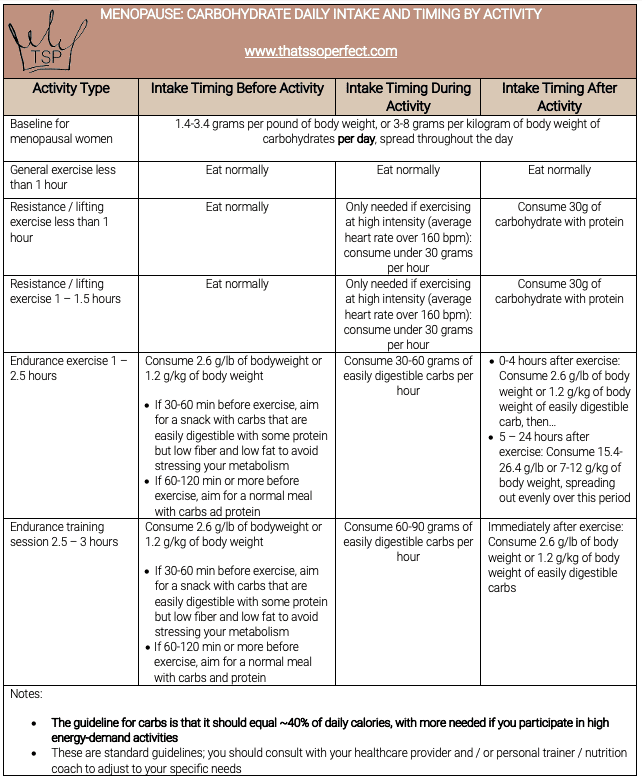
Because carbs provide energy, the amount of carbs you consume daily depends on how active you are and therefore what your energy supply needs will be throughout the day. The timing of when you should consume carbs depends on timing of your activities that demand high energy. We’ve created a table that takes into consideration the changing metabolism and different levels of activity for women in menopause. This table can be used as a guide to determining your carb intake. Keep in mind that what works best for you will depend on your unique health and activity level, so we always recommend consulting with your menopause care team (nutritionist, personal trainer, etc.) to adjust to your specific needs. To use the table, locate the type of activity on the left and then follow across to see suggestion for when to time your intake of carbs and amounts to support that day and that specific activity’s energy demand.
Opting for minimally processed or whole grain carbohydrates that are slow-digesting and high in fiber will contribute to a healthier digestion. This will also provide you with sustained energy levels through the day – meaning fewer blood sugar spikes. We encourage you to read the labels on crackers, breads and pastas which can often be highly processed. Look for less than 10 grams of sugar per serving, the phrase “whole grains” near the top of the ingredients list, and overall a minimal list of ingredients. Limit your intake of highly processed carbs like sugary breakfast cereals, fruit juices and sodas.
Macro: Fats
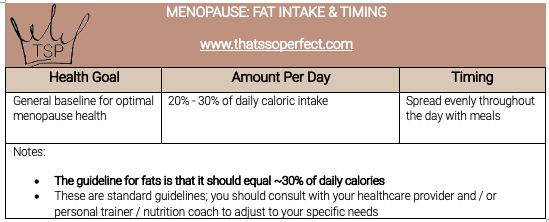
Fats have gotten a bad reputation over the years. The truth is that fats have many important jobs in the human body, including hormone production, nervous system function, improving recovery from exercise, promoting muscle mass, keeping skin soft and pliable as well as lowering inflammation – all of which are beneficial in menopause.
The key to managing fat micros is consuming fats from HEALTHY SOURCES. The risk for cardiovascular disease increases sharply during menopause. A key contributing factor to cardiovascular risk is fat intake from bad fats (saturated and trans fats) such as bacon, sausage, fast food, fried foods, commercially produced fats like margarine and ultra-processed foods like pastries. Making healthier choices for the source of fat is a simple change you can make today and reap the benefits long-term. Some examples of healthy fats include: seeds (chia, flax, pumpkin, etc.), cheeses and milks, nuts, avocado oil, olive oil, hummus and nut butters.
Where Do Fruits and Veggies Fit?
Let’s talk about fruits and vegetables. People often get confused when they see a portions chart or a macro chart that has Protein, Carbs and Fats in it, and then a separate column or portion for fruits and veggies. Keep in mind that fruits and veggies serve a variety of purposes within a nutrition plan. They span across the macronutrient category, for example: potatoes are a starchy carbohydrate, avocados are a healthy fat and black beans are high in protein. Fruits and veggies are also a primary source of highly beneficial micronutrients such as vitamins, minerals and fiber. It’s for this later reason that they get called out separately on a nutrition chart – we want to make sure you’re meeting your micronutrient needs alongside your macronutrient needs.
The fruits and veggies with the most micronutrient benefits tend to have really low calorie counts – so low that often times nutrition coaches consider them “freebies”, meaning you don’t really have to worry about tracking them from a calorie perspective we just want you to get plenty of servings daily (~5) for maximum benefit. However, some fruits and veggies are less “nutritionally perfect” and therefore should be consumed in moderation when counting calories so you should track them within your macros. These tend to have more starches or sugars, such as potatoes, corn, squashes, bananas and dried fruits.
The most beneficial fruits and veggies tend to be the most colorful, with high water and fiber content. Examples include leafy greens (spinach, kale, etc.), cruciferous veggies (broccoli, cauliflower) cucumbers, celery, berries, apples and oranges. Brightly colored fruits and veggies are linked to lower risks of chronic diseases such as cardiovascular disease, cancer and depression. When possible, buy seasonal and local for a fresher, better taste. The daily recommendation for menopausal women is 5 servings of the “freebie” types of combined fruits and vegetables per day to meet vitamin, mineral and fiber needs which is considered in addition to those you count within your macro portions.
An Easy Way To Measure Macros & Portions Without Whipping Out A Scale Or An App On Your Phone
Studies show that most people underestimate how much food they consumed during the day, by as much as 30%-50% of their caloric intake. That means they’re eating 30%-50% more than they realize, and WOW, can that add up quickly! Most of us “eyeball” portion sizes, but the truth is we don’t usually know what an appropriate portion is. This also varies by country, with the U.S. leading the charge (unfortunately) by super-sizing everything so that Americans have been visually trained to think that a gigantic portion is normal. On the flip side, many people find tracking (weighing or counting) their food to be overwhelming, which serves as another barrier to adopting healthier eating habits.
Measuring and tracking portions is the best way to know if you’re consuming too little or too much. However, if you feel that pulling out a food scale every time you want a snack just sucks the joy right out of eating, then you can use our simple guide below to help you practice portion control anywhere, anytime, no scale required. The goal is to calibrate what you’re eating and how much so that you have the right amount of energy available to your body’s needs throughout the day and to optimize your long-term health by consuming the appropriate amounts of macro and micronutrients.
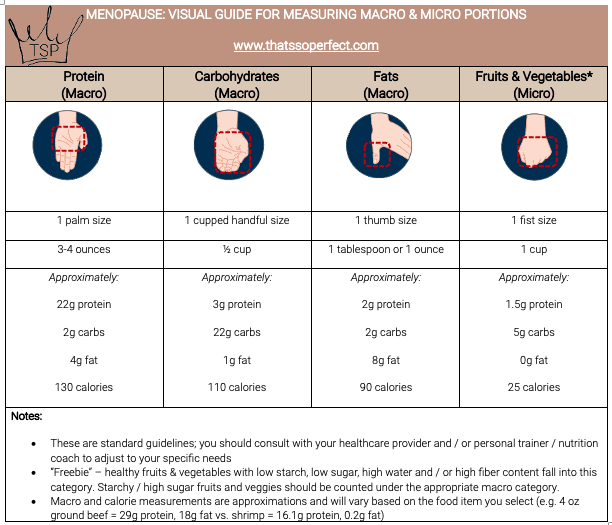
Remember, nutrition is not about perfection, it’s about longterm habits. If you slip one day and eat too much or not enough of a particular macro, don’t beat yourself up. Acknowledge it, understand why it happened, and move on. Perhaps it was intentional – a celebration or a designated cheat day. Perhaps it was an emotional trigger, and you don’t want it to happen again so you give yourself a hug, learn from it and shore up your mental defenses so you can manage it differently next time. Healthy eating should not be seen as a punishment. It should be seen as a benefit – an investment in your current and future self. Following a macros plan does not mean you’ll never again eat your favorite foods or that you’re supposed to starve yourself!
We hope you find this guide helpful enough to jump in and get started on your path to healthier menopause-friendly nutrition. We hope you’ll follow us on our socials for more tips on menopause health and wellness, you can find us here: That’s So Perfect on Facebook and That’s So Perfect on Instagram.
Cheers!


