

Are you stressed out because your hair is falling out? Is your part getting wider? Can you “see through” your hair to your scalp? This issue is definitely at the top of our Scary Menopause Symptoms list.
I recently surveyed all my girlfriends about their top concerns related to hormonal changes brought on by perimenopause / menopause. Without a doubt, hair loss and thinning was consistently one of their top three most worrisome symptoms. Whether you’re going through mid-life hormonal insanity or you’re just stressed to the max due to home and work life, hair loss (shedding) and hair thinning are life-altering for women.
Hair holds a lot of cultural value, and is often associated with beauty, power, social standing, femininity and youth. When a woman experiences hair thinning and shedding, it can have a lasting and negative impact on her identity. As confidence plummets with each hair strand that falls, it’s not uncommon for women to fall prey to self-imposed isolation. In turn, this can lead to depression and anxiety, which exacerbates the hair problem. You see where this leads, right ladies? It can become a never-ending cycle of shame and desperation. We HAVE to help one another break free from this cycle.
Rresearch shows that half of women over 50 will experience thinning hair. Let’s take control of our scalp now, and leverage the resources we have available to care for our hair in the best ways possible.
What Do The Professionals Say?
I recently interviewed my beloved, most-trusted hair stylist, Amanda McDonough for her professional tips and tricks to care for thinning and to combat hair fall. Amanda is a master stylist and colorist as well as the co-owner of Affini & Co Luxury Hair Lounge. I’ve been trusting her to care for my hair for many years. In fact, she was with me before my hair began to thin and has now been helping me actively manage hair thinning and hair fall for a couple of years. We sat down a few weeks ago and had a fascinating 45-minute conversation. We covered hair science, whole-body wellness, the art of color and cut, and the fascinating world of hair care products as they relate to thinning and hair fall.
First, Amanda stressed that it’s important for each woman to understand that we may not be able to entirely combat biology. However, there are still many options to protect and optimize what you have as well as play up your hair strengths. Before we get into a quick lesson on hair science, please keep in mind that I’m barely skimming the surface in this post. There are SO MANY factors that go into hair health. Each woman’s situation is unique. You should always consult your hair stylist, your dermatologist and maybe even your primary care physician to design an approach that works for your individual needs. As you’ll learn below, it’s important to take your whole health ecosystem into consideration.
Three Common Myths About The Hair Growth Cycle That Lead To Unrealistic Treatment Expectations
Most people have no clue how the hair growth cycle works. Many people are surprised at how long the cycles can last. If we’re all being honest here, we’re probably guilty of believing at least one or more of the common misunderstandings around how our hair “works” (grows). And yes, we’re probably guilty of trying a too-good-to-be-true quick-fix product, crossing our fingers and doing a superstitious dance in our bathrooms, and hoping and praying the miracle cure will work FAST. Come on ladies, it’s truth-serum time…..how many of you believed at least one of these myths to be true? I did!
Myth #1
Each of my hair follicles all grow at the same rate, at the same time.
Fact #1
Hair follicles do follow the same growth process, but each follicle is at a different stage in the growth cycle. With over 100,000 on your head, it’s impossible for all of them to be at the exact same stage.
Myth #2:
I shouldn’t find more than a few hairs in my brush. Anything more than that means too much hair is falling out.
Fact #2
As menioned above, the average person has 100,000 scalp hairs at any given time. The normal rate of shedding is about 100-150 hairs per day. That means the normal rate is more than “a few hairs a day.”
Myth #3
My hair seems to have gone from thick to thin overnight.
Fact #3
Since each hair strand is in a different stage in the growth cycle, the density and total number of hair strands stays fairly stable over time. As health conditions change, each follicle may change as it grows, but it’s rarely an “all of a sudden” event. It’s more likely that, because it happens one follicle at a time, you don’t notice it until enough of your hair has changed.
Understanding the science behind your hair can help you narrow down the possible causes. It can also help you make a more informed decision about which tactics you should pursue to improve your hair health. Let’s take a quick tour through the hair growth cycle.
The Four Hair Growth Phases
- Anagen is considered the growth phase and can last 2 – 8 years for a single hair strand. The length of time of the anagen phase decreases with age. This is why your hair begins to feel thinner and weaker with age.
- The Catogen phase lasts about two weeks. It represents the “in between” or progression out of anagen phase and into telogen phase.
- The Telogen phase is considered the “resting” phase and lasts about 2 – 3 months. In this stage, hair is literally neither growing nor shedding.
- The Exogen phase is the shedding stage. In this part of the cycle, the older hair from the telogen resting stage begins to be pushed out (shed) and is replaced by the start of a new strand in the anagen stage.
And so continues the hair growth cycle. Triggers that shorten the growth stage and / or telogen resting phase are usually the culprits for thinning hair and excess shedding. Let’s take a closer look at what could cause changes to those hair growth stages.
Five Common Causes Of Hair Thinning And Shedding
There are five common causes of hair thinning and shedding. Most of these triggers are commonly found in women ages 40-65. These triggers can be caused by a multitude of factors that range from disease / illness, and anxiety, to age-related hormonal changes. They are:
- Inflammation
- Hormones
- Stress
- Poor Nutrition
- Medication-related
One trigger could cause a domino effect to the other triggers. The wide array of root causes, the likelihood that it could be a combination of triggers, and the difficulty in definitively diagnosing the symptoms can result in many women believing there is nothing that can be done. It doesn’t have to be all gloom and doom, though. There are things that you can do to create a healthier environment for your scalp and hair health. There are treatment options you can explore with your healthcare team.
11 Things You Can Do To Combat Hair Thinning and Shedding
I know, I hear you, I really do. It’s SO frustrating that we don’t have a little blue pill-like miracle cure for hair thinning and shedding. However, if you take the time to learn about the growth stages and triggers that negatively impact our hair, you’ll learn there are a number of things you can do to mitigate the situation and potentially improve your hair health. Check out the steps you can take below. My hair stylist Amanda, along with my friend and nurse practitioner Melinda Rhoads (owner of Rho Wellness) helped me create this list. (Always consult with your medical practitioner before trying something new):
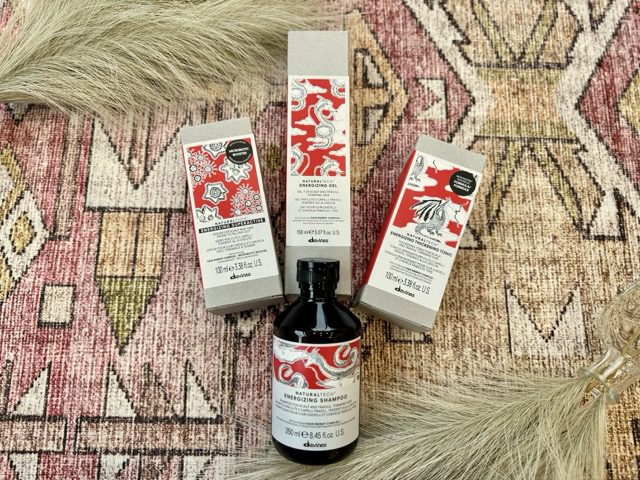
1. Stimulate your scalp to overcome reduced blood flow and create a more ideal environment for the anogen (growth) phase:
- Products with caffeine or other scalp stimulants may help, or look for labels with the phrase “scalp stimulation.” If it’s a topical product, just make sure it’s not something heavy that weighs your hair down.
2. Reduce inflammation: reduce or eliminate gluten and other inflammatory foods, and consider cutting back on that high-cardio workout. Yes, high cardio is now bad for us (more on that in a new post in collaboration with Melinda – COMING SOON!) Gluten has long been known to cause systemic inflammation which includes your scalp and blood vessels that supply nutrients.


3. Healthy nutrition is vital to nourish your scalp from the inside-out. Organic, dye-free, no preservative, whole / fresh foods are always good for your entire system. Sometimes the junk in your food causes inflammation. Other times it may trigger a hormone response or inhibit hormone production. Eating healthy and clean to properly nourish your body is never a bad idea at any age. Maintaining a healthy balance of vitamins, minerals, proteins, carbs and fats can do wonders for scalp and hair follicle health.
4. Hormone replacement therapy may be what your body needs to reboot your system and rebalance hair growth phases. Sometimes, there just isn’t an over-the-counter or natural option that can combat the science of aging. This should always be done under the care of your medical practitioner. By the way, recent studies have proven that HRT is safe for the average, healthy female. Check out our post on the latest science on HRT and treatment options that may be available to you.


5. Vitamins & supplements to offset a deficiency – whether from poor nutrition or other health concerns – may prove to be helpful in optimizing your scalp and overall body function. Thoughtfully supplementing your normal intake is most effective when it’s part of a whole-body wellness approach. This should always be done in consultation with a medical practitioner.
You’ll want to avoid over-supplementing or contraindications with other medications. There’s a lot to consider when using supplements. You may need to time ingestion with meals, some require fats to aid with absorption, some counteract each other when taken together, etc..
- Based on sales and consumer review data, the popular combo-supplement Nutrafol is a favorite. I’m currently taking this to see if it work. I’m only a month in, so it’s too early to report results (remember how long the hair growth phases last!)
- Collagen supplements are also popular, but there’s a debate about whether or not your body can digest them effectively. I haven’ found one that I like yet. Must end up as weird clumps in my drink. You also have to pay attention to the source of the collagen.
- Vitamins A through E also play a role in hair health, each with a specific purpose. You can select individual supplements to target your needs, but again, please make sure you’re consulting with your healthcare provider to avoid contraindications.
6. Prescriptions like Minoxidil, Rogain or over-the-counter pharmaceutical treatments like Harklinniken and Hers may be an option. These are typically serums that you apply to your scalp daily. These should be very carefully considered in consultation with your medical practitioner. Some may interfere with hormone production or other medications. Because many require daily application, they can be costly. Typically, once you start down the pharmaceutical scalp treatment path, it means you have to stay on it forever. Be sure this is a commitment you can make.
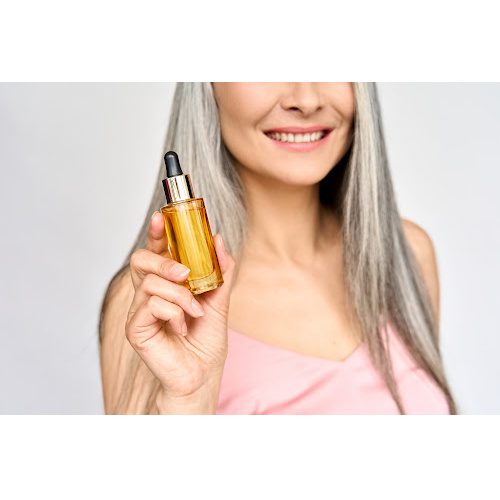
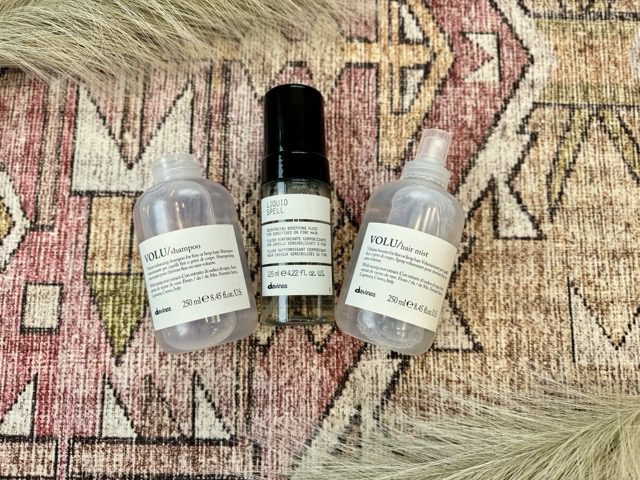
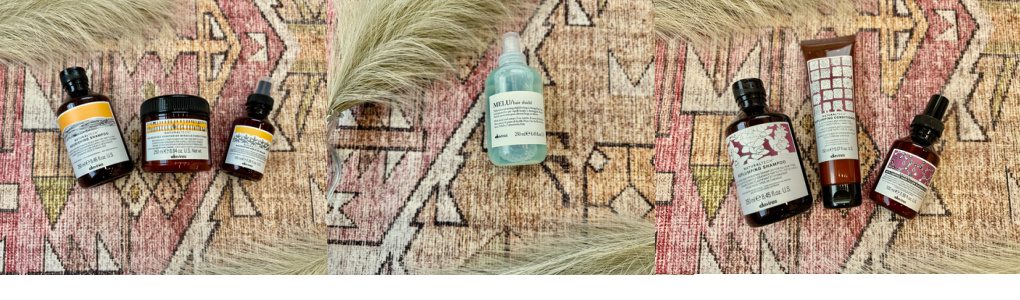
7. Topical style products such as volumizing mist, foam, thickening shampoo, light conditioner or a leave-in are temporary products that can give you the appearance of thickness. Similar to the scalp stimulants mentioned above, you want to avoid selecting heavy products or using so many that they weigh down your hair or clog your scalp. Remember, in the exogen phase, the old follicle is pushed out and replaced by the new one. Clogging your scalp interrupts that process. (Pictured are Amanda’s favorites.)
8. Color or Highlights may help add the appearance of depth and texture, but be thoughtful about whether or not you want to color your hair . Talk through the pros and cons with your hair stylist. Determining if this is the right approach for you really depends on individual hair texture and health.Coloring your hair (going from light to dark) is accomplished by depositing pigment on your hair which fills the hair follicle.
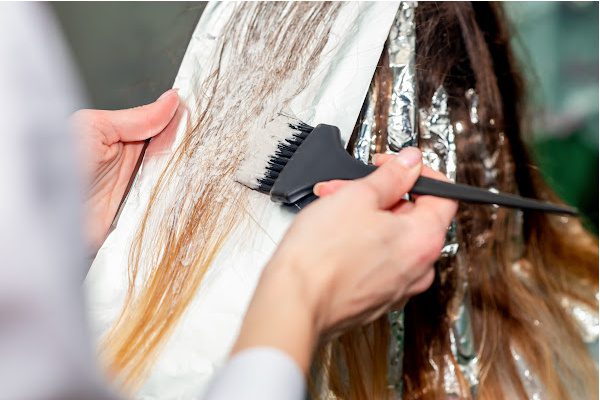
This may make your hair appear thicker, but it’s temporary. If you change your mind and want to go light again, you could risk substantial damage to bleach out the color pigments. Lightening (bleaching) basically blasts the hair shaft open so the color can be stripped out. Then you replace it with a different color that seals the shaft closed again. The bleaching step can be hard on thin hair, drying it or damaging it further. An experienced stylist can advise you on what they think your hair can tolerate, and then how to care for it afterward to maintain optimal health.
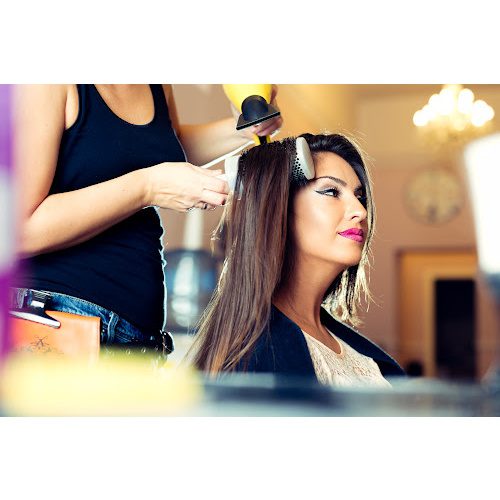
9. The right cut and style can provide you with several options that can accentuate the best qualities of your existing hair. The style also has to take into consideration your own tastes and comfort with your hair. For instance, long, thin, fine hair can look fuller in a shorter style that appears to fill out the ends. It also eliminates the extra weight from longer hair. Short, fine hair often lends itself to pixie cuts or bobs that can be styled in fun ways to offset the appearance of thinning. It all
depends on your comfort level with short hair and the shape of your face. You have to be consistent with your cuts. People with thinning hair become afraid of regular trims. This works against you. If your hair is fragile and breaking on the ends, snipping it via a trim will leave you with healthy ends. This prevents further breakage and will improve the appearance of your hair.
10. Protective products: In Amanda’s words, “Product, product, product! People do not give products enough credit. I can talk about the benefits of products all day long. A haircut can only support itself so much – you need product to help hold and shape.” A lightweight pomade can get the cut to perform the way you want and to achieve the appearance of fullness that you seek (like the pixie cut mentioned above). THE most important styling product is a heat protectant. Never, ever skimp on heat protection, which is like SPF for your hair. Even healthy hair suffers from the stress of hot styling tools, which can cause dry, brittle hair that breaks easily. If your hair is already stressed, that extra heat could be thing that damages your hair. When using a hot tool, never go over 350 degrees (325 degrees is preferred).
11. Improve circulation to your scalp. Products that contain caffeine or other stimulants can help improve circulation. In doing so, you enable delivery of oxygen and nutrients necessary for hair growth. For a non-topical approach, many people enjoy hanging their head upside down for a minute or two over the side of the bed. You can also do handstands (yoga, etc.). I try to hang over the edge of the bed once per week to increase blood flow to my scalp. (Handstands are not for me, LOL!) Yep – my family thinks I’m nuts when they see me doing this but that’s nothing new. You can also try regular scalp massage. You can use your own hands to massage while shampooing your hair, or using a scalp massager tool. This also a great, low effort way to stimulate blood flow to your scalp.
Now that you’ve armed yourself with more knowledge, go have that chat with your dermatologist, NP, and hair stylist to see which options will work best for you to combat hair fall and thinning. You can do this, ladies!
Cheers, lovelies!


